From Scaring to Daring: Why Children Love and Deserve Scary Books
A cool breeze wafts in the air, rustling green leaves that are putting up their final fight. Some have already succumbed into shades of red, brown, and orange, marking the end of Halloween, the scariest time of the year. A night when one can prance around in costume without much fanfare, but you know what never goes out of style at the Maryland Book Bank? Scary stories, free to read for anyone that dares.
On a very serious note, I’ve noticed that one of the quickest ways to pique a child’s interest on a Bookmobile visit is to ask them if they like scary books because they are more likely to say yes than not. This anecdotal observation is not an isolated one– while speaking to Kim, our Program Director, she mentioned that horror was very popular with children and she wasn’t sure why. This question prompted me to think about the relationship between horror and children’s literature: why do young readers love horror fiction, and in what ways can horror help enrich their development?
I cannot talk about horror in children’s literature without recognizing the debate about its role in children’s fiction. Historically, horror was not a genre that was directly targeted to young readers prior to the late 1980s and early 1990s (McCortt,6). Instead, elements of horror were interwoven into children’s literature, particularly in the fairytales written by the Brothers Grimm and Charles Perrault. The first books to be explicitly branded as horror for young readers were series such as R.L. Stine’s Goosebumps collections (McCort,6). These stories tend to feature more of the ‘spooky’ and supernatural sort of horror as opposed to gore, and are written in ways to reassure children as opposed to traumatizing them. Still, parents and educators are reasonably concerned about giving horror books to children, and Goosebumps still stands as one the most challenged stories for young American readers. There is a real tension between what horror can offer to children and the potential negative effects of marketing the genre to children itself. Despite this friction, the argument against scary stories has ramifications on our young readers’ personal development.
On a much larger scale, I believe that the debate about children’s books reflects the restrictive ways we see children’s literature. In Mac Barnett’s Make Believe (shoutout to Bob, one of our volunteers, for gifting me this book), the author argues for expanding the meaning of what we consider to be children’s literature. In particular, he critiques the narrative about children’s fiction, mentioning the impact that what could happen when we fail to explore difficult emotions and topics in children’s literature: “Kids may abandon reading and seek out art and media that better reflects their lives. Or, instead of deciding that there is something wrong with books, children may decide that there is something wrong with themselves, and become ashamed of the very human feeling that adults have excluded from their literature” (Barnett, 9) . If we restrict what children’s literature (and what horror) could mean to children, we are potentially creating more harm than good towards their personal development because we are not giving them the chance to embrace emotions that are more painful to handle. Now, I’m not advocating for horror that is traumatizing and senseless, but I echo the Barnett’s sentiments: these stories “must be as varied as the lives of the children who read them.” (Barnett, 9).
And truly, all children have expansive and complex lives, with many having to navigate difficult issues, many of which shape how they approach their lives in adulthood. This can be illustrated through Adverse Childhood Experiences (or ACEs for short), which are traumatic events that occur in childhood. These experiences are unfortunately common, with three to four or more high school students experiencing one or more ACEs, and one in five experiencing five or more ACEs. Children often go through hardships that they often did not choose, and ACEs are a somber reflection of this issue. Horror fiction is a good medium for children to explore these challenging emotions and realities in a safe and cathartic environment, contained in the comfort of a good book. In fact, there have been studies that indicate that dopamine gets released when we are scared as a result of adrenaline rush that comes from the release of cortisol, which activates a sense of pleasure. Beyond the chemical level benefits, reading horror stories can teach children lessons and build their ability to remain resilient.
Scary stories are employed to teach children across many cultural spaces. The Grimms Tales, for instance, teaches children about greed, hard work, and the importance of kindness. Another example of this can be seen in oral traditions: Oral Indigenous storytelling has been used as avenues to teach valuable lessons about empathy, respect, and taking care of themselves and their communities. A popular contemporary example of this can be seen, ironically enough, in the Goosebumps series. The stories explore lessons around inclusivity, friendship, and collaboration. Fear, in other words, can be a teacher, not only through its lessons, but also in its ability to tap and acknowledge difficult emotions. By doing this, young readers embrace their fears, build resilience, and find community in other people.
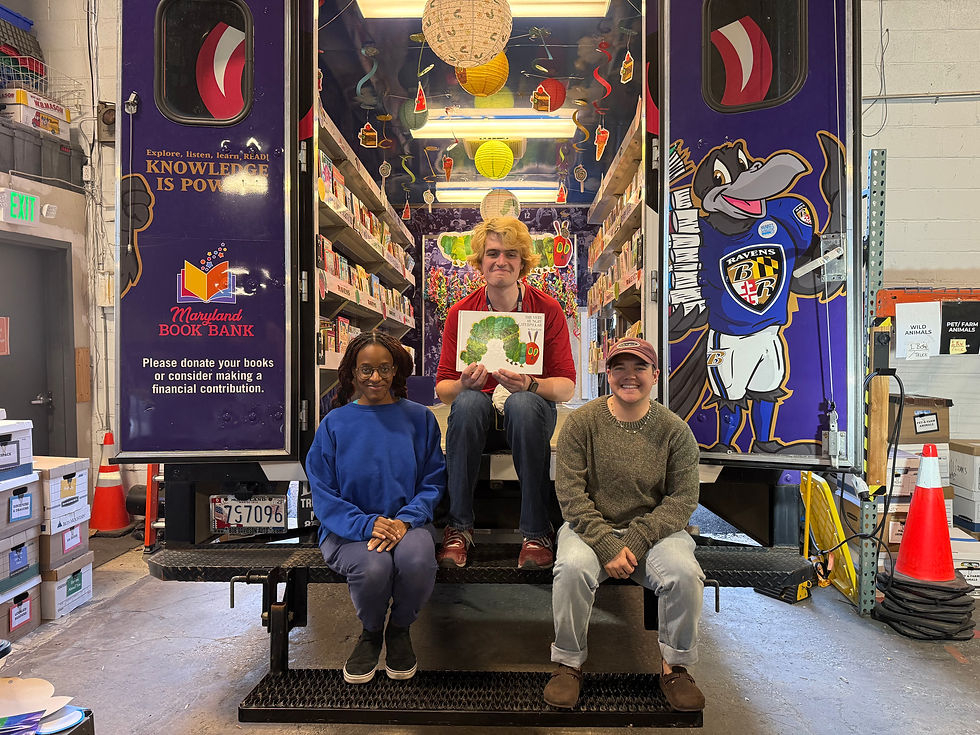
So yes, the greens are putting up their final fight. As they fall and settle among the Baltimore streets, a young reader steps into a purple Bookmobile, grabbing a book from a shelf marked: Scary. Is it Goosebumps, or Scary Stories to Tell in the Dark? Regardless, they take the book home with them. They might read it in the dark, and they might become scared, but it’s through these stories that they become more resilient, facing life’s challenges with their own unique sense of dignity and strength. I definitely don’t think they’ll need to be dared into that, either.


Comments