Literacy, Choice, Confidence: The Foundation of Personal Growth
We orient the conversation about literacy around its relationship to success. We can easily quantify this by referencing impressive rates of graduation and upward-trending GPAs – or inversely by examining how illiteracy leads to unemployment. What is frequently excluded in the conversation about literacy is how being able to read means being able to choose. Choice is a beautiful privilege. For as long as humans have walked the earth, choice has helped us develop a sense of autonomy and confidence.
Growing up, our choices may have been as simple as deciding between crayon colors, or choosing who to play with on the playground––decisions based on aesthetic and social instinct. We could succeed in a world of choice that did not require us to read or write. As we get older, our choices become dependent on being literate, even if we are not.Buying groceries, managing finances, interpreting legal documents, and navigating healthcare systems are just a few of the critical responsibilities involving choice that we encounter in our adult lives, relying on literacy to do so independently. Speaking of choice, illiteracy itself is rarely one. Various factors are responsible for 1 in 5 Maryland residents reading below a 5th grade level. Many of these factors work in tandem, like poverty and the associated poor education opportunities. Intellectual disabilities such as dyslexia, whether diagnosed or undiagnosed, can make it incredibly difficult, if not impossible for people to develop literacy. And a significant population of people who remain undiagnosed or misdiagnosed, also likely due to their socioeconomic conditions, suffer from a lack of educational accommodation, which results in chronic illiteracy.
Literacy is like having a box of tools: each tool can be used to solve a different problem our adult lives throw at us. Beyond reading and writing, literacy gives us the opportunity to better communicate with those around us. Literacy challenges us to ask the right questions and get the right answers. Literacy develops our self-determination, and our ability to generate and express our unique ideas. All of these tools work together to build our confidence as an individual in the world. Literacy is so closely linked to social and emotional success (aside from the more obvious professional successes), and these implications are reflected in the studies of children. The research explains competence, assertiveness, and a strong sense of belonging among the early learners of literacy. These communication skills translate into secure relationships with peers, teachers, and even family members.
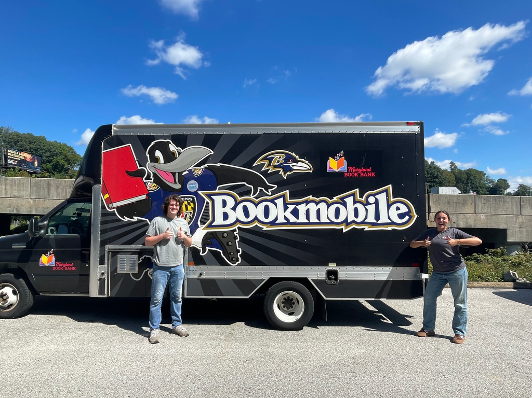
If putting more books into the hands of people, children and adults alike, can increase their confidence and independence, the Maryland Book Bank is the place to start. The Book Bank has been a crucial part of shaping the literacy of Maryland students over the last 35 years, expanding access to books to underserved areas vulnerable to illiteracy. By allowing children to select whichever books they please, the Maryland Book Bank reinforces the value of choice to an individual’s success. Individuals experience serious long-term consequences to illiteracy and the lack of autonomy that accompanies it: People become vulnerable, relying on the help of another to go about simple tasks in their daily life. Losing our autonomy increases feelings of low self-esteem, insecurity, and helplessness. The issue of illiteracy,then, becomes even more crushing as it spirals from an explicit inability to independently read or think critically into difficulty forming social networks or interpersonal connections due to a lack of self-esteem. Having ample and affordable opportunities and resources like the Maryland Book Bank is the key to bridging the gap between those with the resources to succeed and those without.
Author's Note: This piece was written by Amaya Cunningham, a student at Loyola University Maryland, with editorial support from Col Hallinan, Warehouse Coordinator at the Maryland Book Bank.


Comments